New Customer?
If you would like to apply for a trade account with Treadway, please download and complete the trade account application form here.

If you would like to apply for a trade account with Treadway, please download and complete the trade account application form here.
Brake hoses are the vital flexible links within a trailer's hydraulic braking system, transferring hydraulic brake fluid between the hydraulic pump or actuator and the hydraulic brake hub sets while accommodating the independent movement of the axle.
Because trailer suspensions must travel freely over uneven terrain, these hoses provide a level of flexibility that copper lines cannot match. This flexibility makes them much easier to install during trailer builds. Furthermore, brake hoses are more resistant to kinking, which helps prevent restricted brake fluid flow.
Correct hose installation and routing are essential to prevent premature component failure. Hoses should be routed to allow full suspension travel without stretching, twisting, kinking, or contacting moving or abrasive components. Properly secured brake hoses help maintain braking performance, reliability, and safety under demanding operating conditions.
Note: The following component lists include the hardware required for installation.
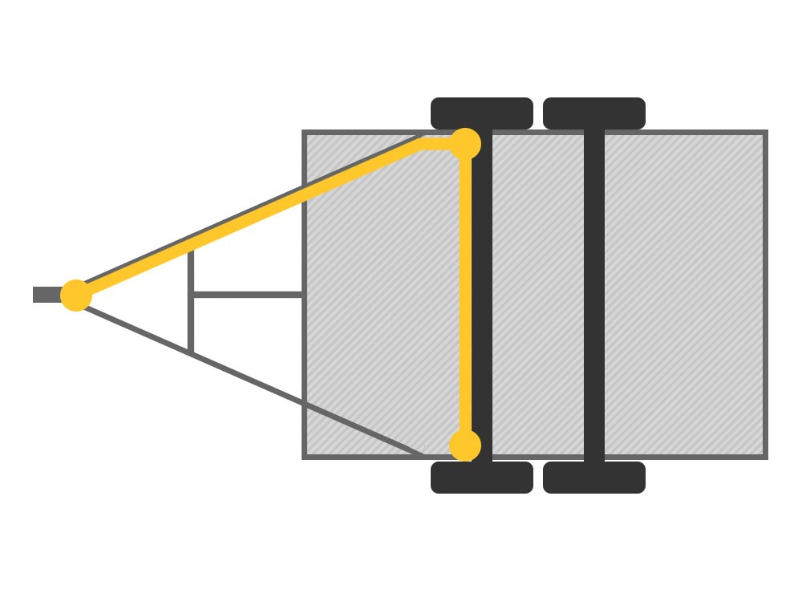
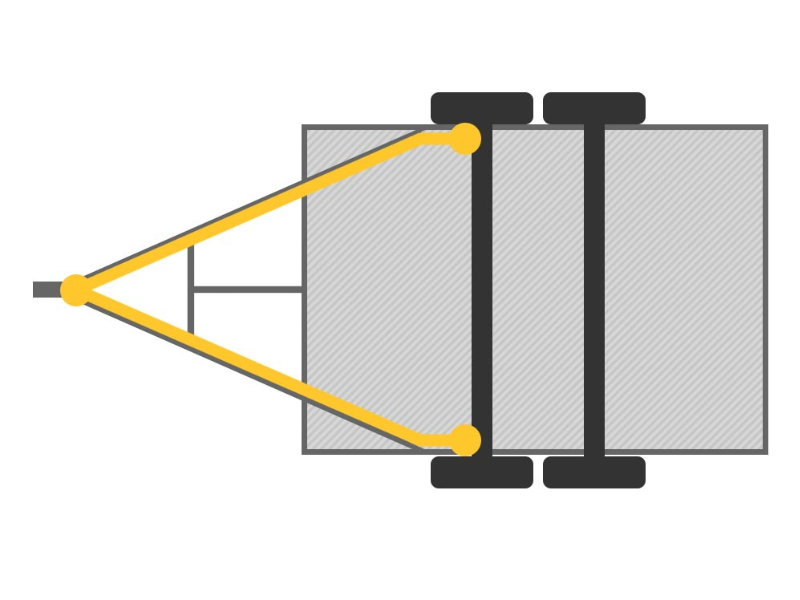
Where braided stainless steel brake hoses are used, they reduce hose expansion under hydraulic pressure. Combined with banjo fittings, they provide flexible installation options in confined spaces while creating a compact hydraulic layout that simplifies hose routing. They are also much easier to use compared to other variants, resulting in an easier trailer build.
Using new copper crush washers during installation is essential to achieve a reliable metal-to-metal hydraulic seal. Copper washers should never be reused, as previously compressed washers may no longer provide an effective seal after disassembly.
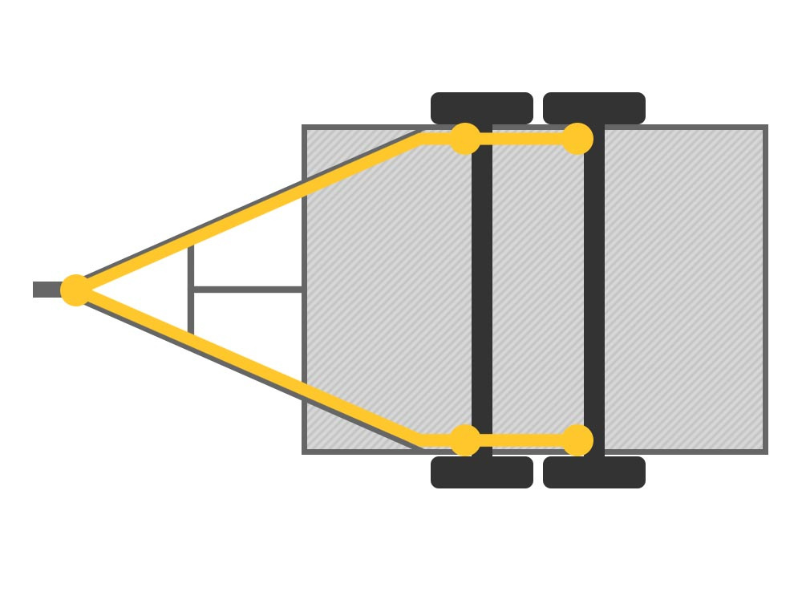
The tandem braked axle configuration uses double banjo bolt connections to create a compact and efficient hydraulic circuit linking both axles. This arrangement simplifies hose routing while maintaining a consistent sealing method throughout the braking system. Careful hose routing remains essential to ensure adequate clearance and unrestricted suspension movement across both axles.
For safe and reliable operation:
Brake hoses transfer hydraulic brake fluid between the actuator (hydraulic pump) and the hydraulic braked hub set while allowing the axle to move independently with the trailer's suspension. Their flexibility prevents stress on the hydraulic system that rigid brake lines cannot accommodate.
Braided stainless steel hoses provide a more responsive braking system by eliminating line expansion. They are easier to install than traditional copper, naturally resistant to kinking, and feature a protective outer sheath to ensure long-term reliability on any trailer build.
Proper brake hose routing prevents hoses from stretching, twisting, kinking, or rubbing against tyres, suspension components, or sharp edges. Correct routing helps maximise hose life and ensures reliable braking performance throughout the trailer's full suspension travel.
Both configurations use the same hydraulic components but accommodate different trailer chassis layouts and hose routing requirements. The appropriate configuration depends on the mounting arrangement and available space within the trailer design.
Set Up C is designed for trailers fitted with two braked axles. It uses additional braided hoses and double banjo bolt connections to create an efficient hydraulic circuit linking both axles while allowing unrestricted suspension movement.
No. Brake hoses should remain untwisted after installation and have sufficient slack to accommodate the trailer's full suspension travel without placing unnecessary stress on the hydraulic system.
The correct HydroBrake components depend on your trailer's axle configuration, Gross Trailer Mass (GTM), brake assembly, and hydraulic system design. If you are unsure which components are suitable for your application, contact the Treadway technical team for expert advice.
Treadway's HydroBrake (hydraulic brake) range offers a comprehensive hydraulic braking ecosystem engineered to meet the demands of New Zealand trailer manufacturers, builders, and repairers. Designed for trailers from 2,500 kg to 4,500 kg GVM, our kits incorporate high-quality components engineered for durability, corrosion resistance, and dependable braking performance.
HydroBrake components are designed to work with industry-standard trailer braking systems, making upgrades and replacements straightforward while minimising changes to existing trailer designs.
Explore our full range of HydroBrake kits and other brake systems to find the right braking solution for your trailer build.